Monomer: Styrene
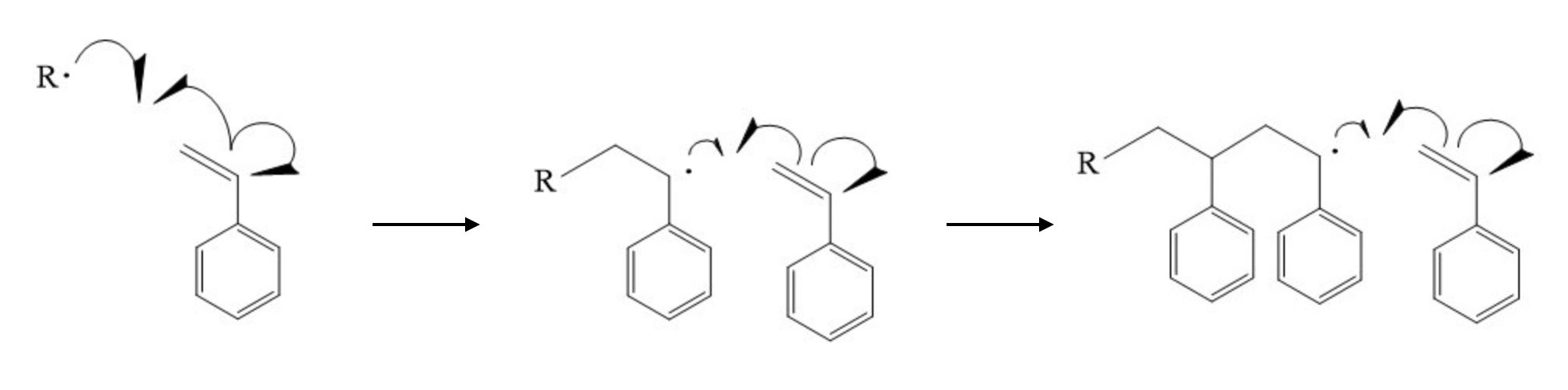
Fig. 7 Polymerization of styrene via carbon–carbon double-bond opening.
The two reactive carbons we will name C1 (the internal,
phenyl-bearing carbon) and C2 (the terminal methylene carbon).
Styrene polymerizes
by radical addition: the C=C double bond opens so that each radical
carbon bonds to a radical carbon on an adjacent monomer
(Fig. 7). htpolynet needs to be able to refer to
those two carbons by name in the reactions block, so they get
explicit labels (C1 and C2); the remaining atoms keep generic
names.
Valence-conservation and the active form
As described in the user guide,
htpolynet requires each reactive atom to carry a sacrificial
hydrogen that is deleted when a new bond forms. The natural,
“inactive” form of styrene has a C=C double bond and so the would-be
reactive carbons don’t have an H to spare:
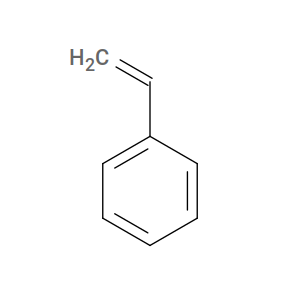
Fig. 8 Styrene (inactive form).
The active form we hand to htpolynet is ethylbenzene, which
carries two extra hydrogens on what will become the reactive carbons:
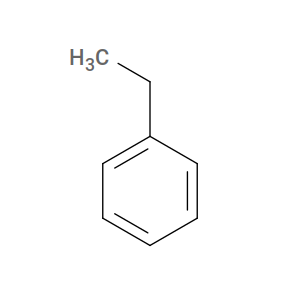
Fig. 9 Ethylbenzene (active form of styrene, monomer name STY).
In-config SMILES generation
The constituents block of 1-polystyrene.yaml carries the SMILES
string and, via the SMILES atom-mapping syntax ([CH2:1],
[CH3:2]), the names of the two carbons referenced by the cure and
cap reactions:
constituents:
  STY:
    smiles: "c1ccccc1[CH2:1][CH3:2]"
    reactive_atoms: {1: C1, 2: C2}
    count: 1000
When htpolynet run starts, it sees the smiles key, invokes
RDKit to generate lib/molecules/inputs/STY.mol2 with atom names
C1 and C2 substituted at the mapped positions, then proceeds
with the usual AmberTools parameterization
(antechamber → parmchk2 → tleap). The mol2 it writes
looks something like this, with the two reactive carbons named:
@<TRIPOS>ATOM
      1 C       ...  C.ar  1  STY  ...
      2 C       ...  C.ar  1  STY  ...
      3 C       ...  C.ar  1  STY  ...
      4 C       ...  C.ar  1  STY  ...
      5 C       ...  C.ar  1  STY  ...
      6 C       ...  C.ar  1  STY  ...
      7 C1      ...  C.3   1  STY  ...
      8 C2      ...  C.3   1  STY  ...
      9 H       ...  H     1  STY  ...
     ...
Users without RDKit can instead supply a pre-built mol2 in
lib/molecules/inputs/ and use the rename_atoms key in the
config to assign atom names by index — see
Molecular Structure Inputs for the full alternative path.
The next page covers the reaction dictionaries
that tell htpolynet how to glue these monomers together.